Quiet Tools: A Weekly Inventory to Reorient Creative Work
Question: How might a five‑item, once‑a‑week inventory of the tools you actually use help steady attention and simplify creative decisions? This short studio exercise grew out of a single problem: an overfull worktable and underused habits. The practice below is small, repeatable, and designed to be reviewed rather than perfected.
Problem
In many creative studios the issue is not a lack of tools but a lack of clarity about what matters. We accumulate materials, gadgets, and rituals until the presence of things becomes a kind of noise. That noise steals a modest but crucial resource: the attention needed to begin and finish work. The immediate problem is practical—too many options, too much visual clutter—but the deeper problem is decision fatigue. When starting a session, you waste minutes and sometimes hours debating which pencil, which paper, which process feels right. A weekly inventory of a very small set of objects is an experiment in reducing those frictions.
Principles
- Constraint as clarity: Limiting the set of active tools creates easier decisions and surfaces what’s essential.
- Rhythmic attention: A weekly cadence balances flexibility with habit, allowing small adjustments without making the practice feel rigid.
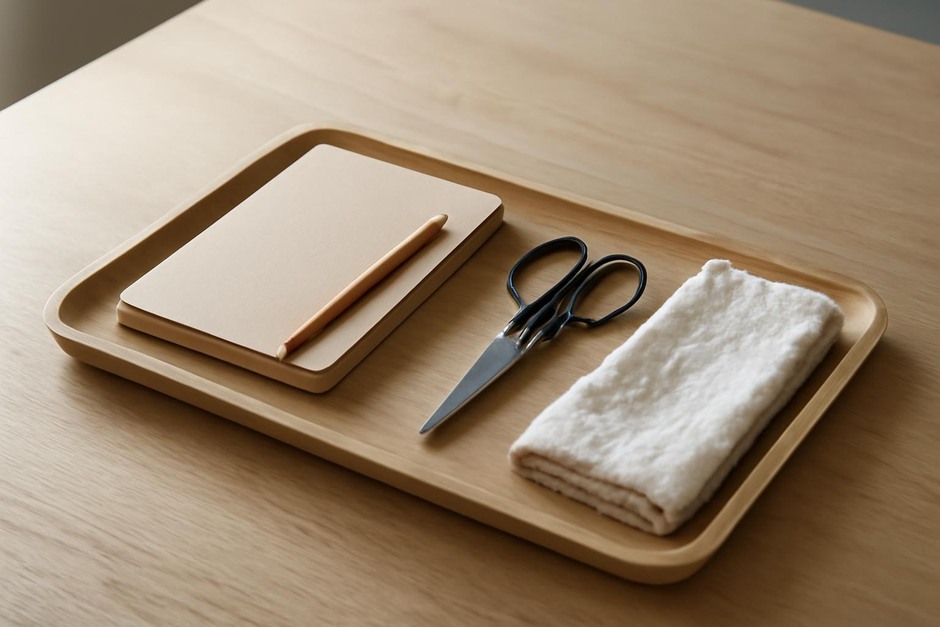
- Visible commitment: Laying out objects in a simple tray or shelf signals intention and reduces the friction of starting.
- Inquiry over judgment: The aim is to notice patterns—what you reach for, what you avoid—rather than to enforce a perfect smallness.
- Maintenance as care: The ritual includes a quick tidy and minor upkeep, which preserves the tools and honors the work.
Process (How to do it)
- Choose a moment each week—a saturday morning, an after‑dinner slot, or the last fifteen minutes of a workday—and keep it short: 10–20 minutes.
- Collect five items you expect to use in the coming week. These can be tools, materials, or small reference objects: a specific pen, a block of sandpaper, a favorite sheet of paper, a particular book, a jar of pigment.
- Place them together on a small tray, shelf, or worktable segment. Photograph or write a single line about why each item matters this week.
- Do one maintenance action: sharpen, refill, clean, sand, or otherwise prepare each item for use.
- Set a simple goal tied to use rather than outcome, for example: “Use two of these items in three different sessions,” or “Spend three 30‑minute slots with the pen.”
- At the end of the week, review briefly: what was used, what was ignored, what surprised you.
Examples
Writing
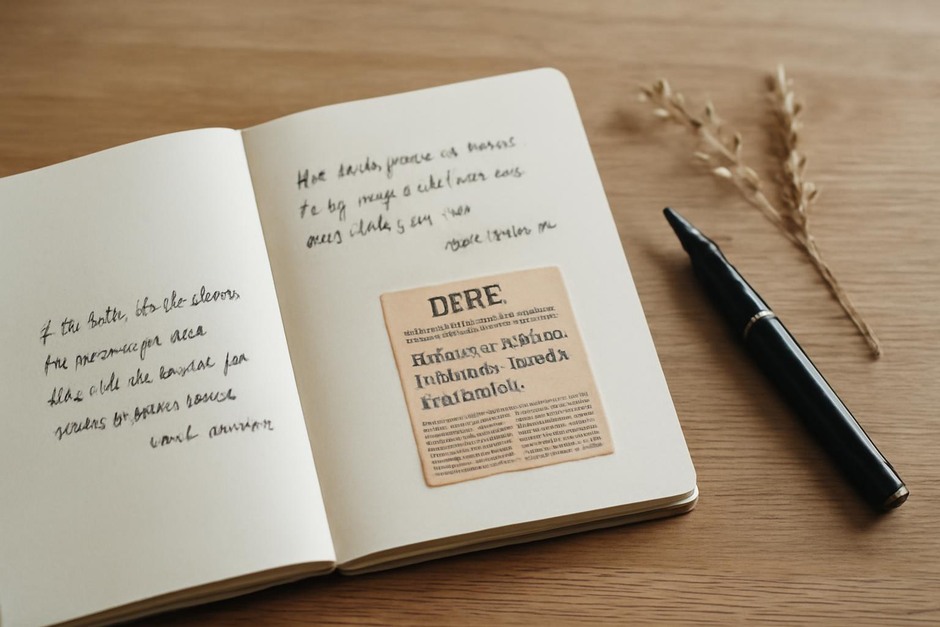
Five items: a hardcover notebook, a fountain pen, a pocket index card, a favourite paragraph marked in a book, and a small timer.
Process: Keep the notebook and pen on a small ledge. Use the timer for two writing sprints and the index card for a single daily prompt. The marked paragraph serves as a quiet model or a restraint—copy it or rewrite it to warm up. Review: Did the fountain pen draw me into longer sessions? Which prompts stuck?
Woodworking
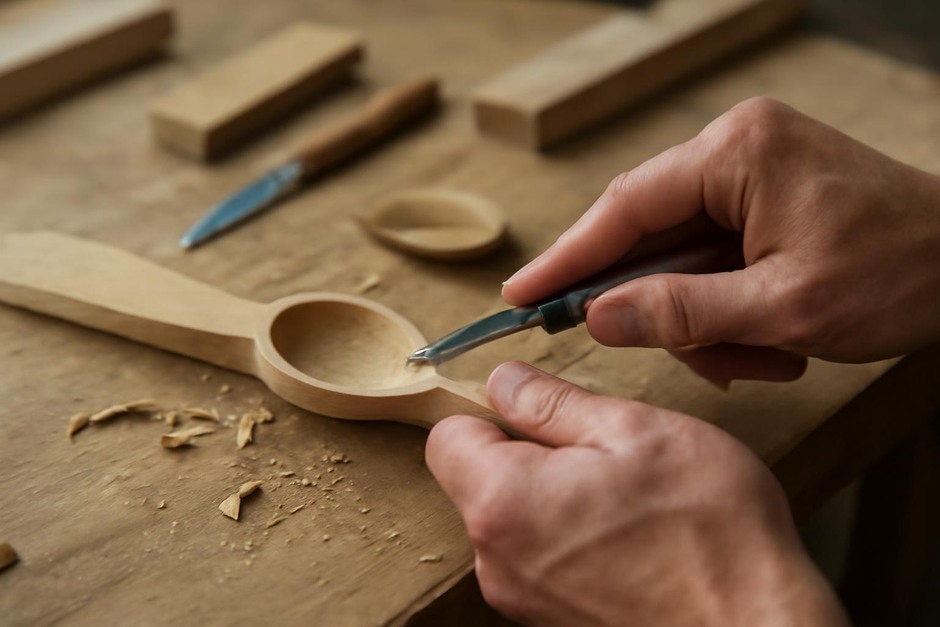
Five items: one versatile plane, a block of beech for practice, two grades of sandpaper, a small jar of beeswax, and a wooden mallet.
Process: Lay the plane and block on a bench near the light, keep sandpaper in a small envelope, and plan two short shaping sessions. Maintenance might be a quick hone of the plane’s blade and a wipe of wax. Review: Which grit did I reach for? Did practice blocks help warm the hands?
Collage and Paper Work
Five items: a stack of neutral papers, a pair of scissors, a glue stick, a small ruler, and a single found image or scrap for inspiration.
Process: Limit choices by using the neutral paper as the only backing, then explore combinations. The found image anchors the week’s theme. Review: Did the restriction lead to richer combinations or to frustration?
Review
After four weeks, patterns emerge: certain objects recur, others are abandoned. The point is not to reduce to five things forever, but to make visible the rhythms of attention. Sometimes the inventory will reveal a need—for storage, for a different light, for more time. Sometimes it reveals that the simplest tool is the one you use most.
Practice Checklist
- Set a 10–20 minute weekly slot.
- Select five items you intend to use.
- Place them together in view (tray, shelf, or corner of the table).
- Note one sentence for each item: why it matters this week.
- Do one small maintenance task for each item.
- Make a usage goal tied to sessions, not outcomes.
- At week’s end, record what was used and what wasn’t.
- After four weeks, reflect on recurring patterns and adjust your process.
Short, visible practices like this don’t remove the work. They simply change the shape of the beginning. That small initial reduction of choice often makes the next half hour of attention slightly easier to find—and that modest ease accumulates into steadier creative days.