One Question, One Drawer: A Weekly Framing Practice for Quiet Creative Work
The Question
What single question could gently shape the next seven days of your creative life?
Problem
Working on many small ideas at once often feels like useful motion but yields little sense of completion or learning. The studio is full of half-begun things, and the mind hops between tasks without a clear through-line. This scattered attention is not just about time management; it’s a lack of a framing device that can hold experiments together long enough to reveal patterns.
Principles
Below are four principles that make the one-question framing practice manageable and durable in an everyday creative life.
- Limit: One question prevents the week from becoming a list of unrelated to-dos. The constraint encourages depth.
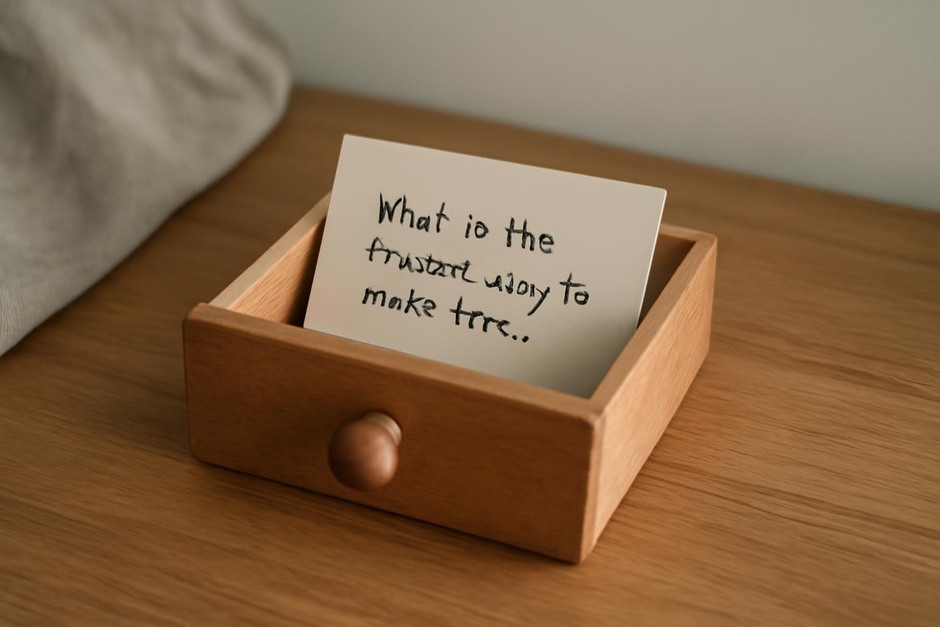
- Contain: A physical container—a drawer, a jar, a simple envelope—anchors the practice and gives it ritual weight without ceremony.
- Iterate: Treat the week as an experiment. The question is not a demand to produce a masterpiece but a lens for observation and small tests.
- Review: A brief review at the week’s end turns scattered impressions into useful notes that shape the next question.
Process (a simple way to begin)
Do this on a quiet Sunday evening or the last hour of your workweek.
- Choose a question that is both specific and open. Examples: “What would this surface feel like carved with a spoon?” or “How does morning light change the color of this paper?” Keep it short—one line.
- Write the question on a small card or a slip of paper. Fold it and place it into your chosen container (a shallow drawer, a small tin, an envelope on your desk).
- Over the next seven days, let the question guide small acts: a 20-minute test, a photograph, a sketch, a failed attempt, or a note. When you work, read the question aloud or glance at the card to reorient attention.
- Keep the actions modest. The goal is regular contact with the question, not grand outcomes.
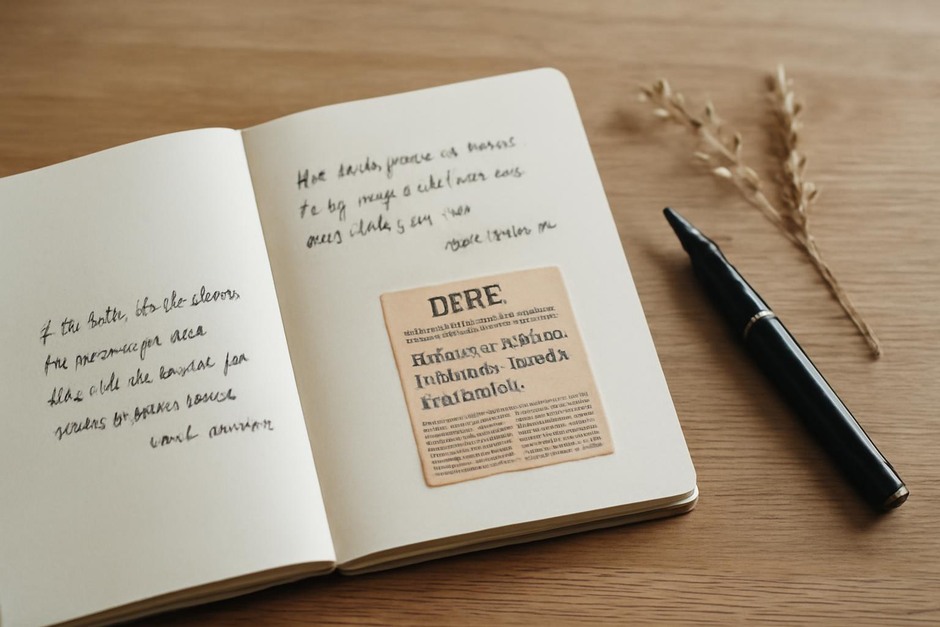
- At the end of the week, take the card out and spend fifteen minutes reviewing what the question revealed. Record one insight or one new question.
Examples (studio notes)
Example 1: Material Curiosity
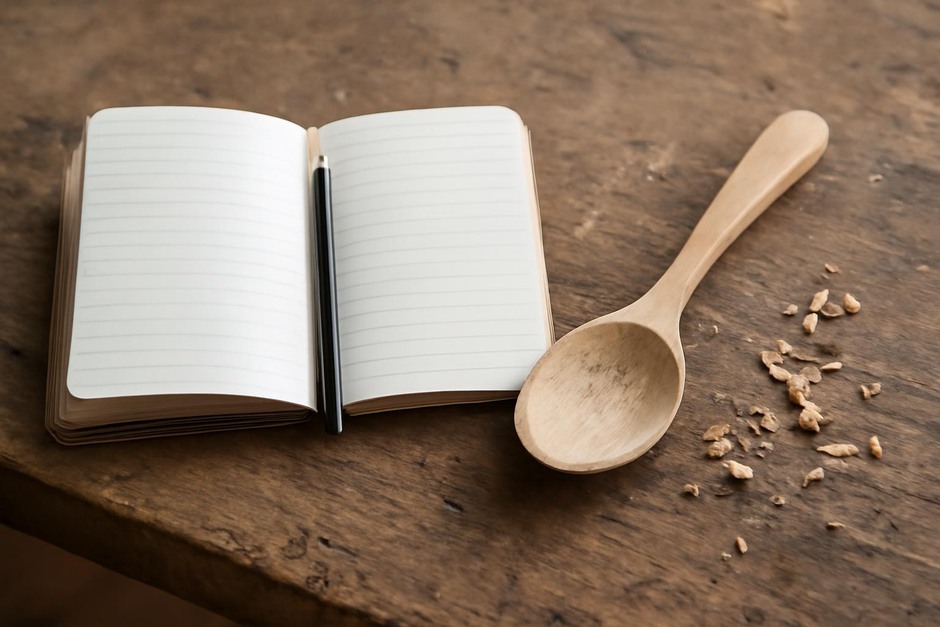
Question: “What will walnut shavings do to the surface texture of this tabletop?” The week included three short sessions: shaving, rubbing, and finishing tests. The record was a single sentence: “Shavings abrade more smoothly when cut against the grain; a soft cloth brings out a warm sheen faster than oil alone.” Next week’s question became about finish compatibility rather than starting a new project.
Example 2: Reading into Making
Question: “Which paragraph in the essay best suggests a color palette?” Instead of chasing multiple inspirations, the week was spent with one paragraph, with color swatches and small ink washes made while reading. The result was a set of four small studies and a better sense of restraint when choosing hues.
Example 3: Rhythm and Time
Question: “What can I do with ten minutes of focused attention every morning?” The week’s experiments included ten-minute journal entries, a short collage, and a single pen drawing each morning. The practice produced a modest but noticeable increase in momentum; the final note read, “Momentum is cumulative: ten minutes is a promise I can keep.”
Review
At week’s end, the review should be brief and generous. Note what surprised you, what felt frictionless, and one small adaptation for next time. The point is to convert lived experiments into usable constraints for the next question.
Practice Checklist (concise)
- Pick one clear, short question each week.
- Write it on a card and place it in a small container on your desk.
- Do at least three short experiments or observations during the week inspired by the question.
- Journal one insight (two sentences) at the week’s end.
- Choose the next week’s question based on that insight.
This is a small, repeatable practice for quiet places and slow afternoons. The drawer becomes less a repository of things and more an index of attention—a place where one question waits to be tested, reviewed, and then set aside for the next.